|
A Memphis professor has been awarded a national poetry prize she never asked for.
Since its inception in 1987, the Aiken Taylor Award for Modern American Poetry, presented by the Sewanee Review, has been given to poets like Gwendolyn Brooks, Louise Glück, Billy Collins and Jericho Brown.
This year, it went to Caki Wilkinson, a professor of English and the director of creative writing at Rhodes College.
“It’s funny because it’s an award that I didn’t apply for,” she said. “I didn’t have any sense that it was coming.”
“I did have a little bit of a crisis … But it feels nice to be recognized for the work that you’ve done over time rather than just one individual thing.”
Theater, performance and pyrotechnic language
It takes about nine months to decide on an Aiken Taylor winner, said Eric Smith, the managing editor and poetry editor at Sewanee Review, America’s oldest continuously published literary magazine.
For nearly 40 years, the honor has been awarded to poets who have contributed to modern American poetry. Recently, the choosing body leans toward writers who are mid-career, those past their first-book freshness but not quite ready for a lifetime achievement award.
Smith has been part of the team that chooses Aiken Taylor winners for about seven years. He’s been a fan of Wilkinson for longer.
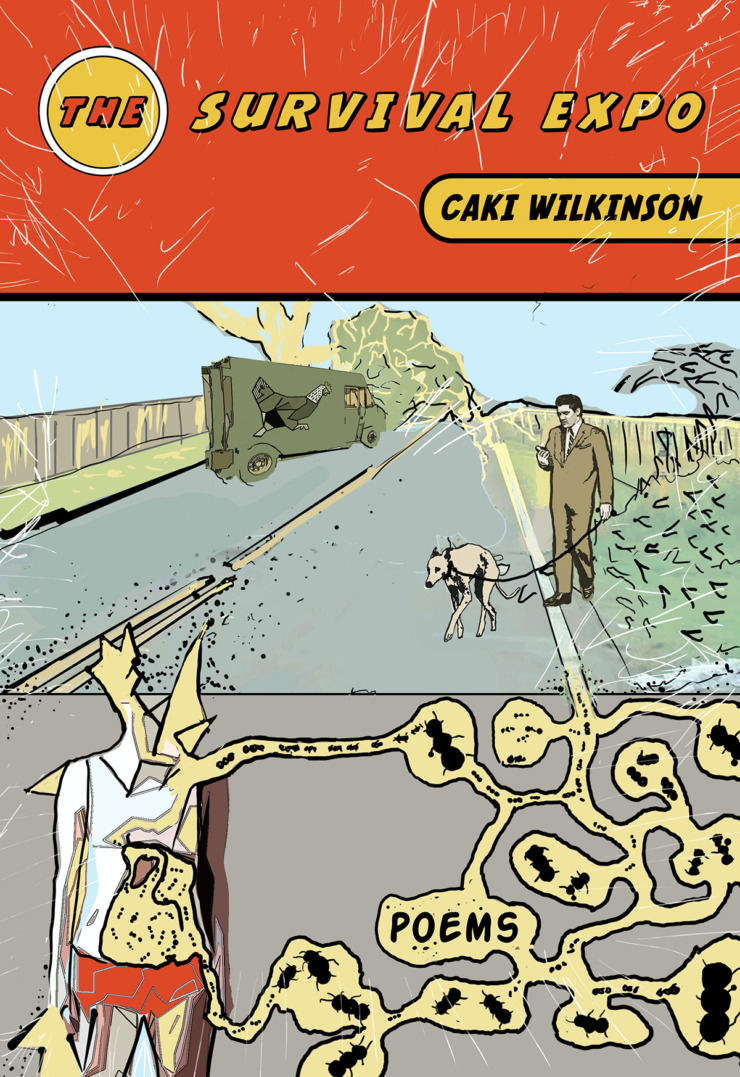 Caki Wilkinson's most recent poetry collection is called “The Survival Expo.” (Courtesy Caki Wilkinson)
“I really admired her formal dexterity,” Smith said of Wilkinson. “I admired the richness of her language. I admired her invention.”
Wilkinson’s poetry is a balancing act. She matches her dark humor with emotion. Pairing narratives with strict forms, Wilkinson’s poetry is hallmarked by her use of structure, rhyme and meter.
“I start putting all these constraints around the writing,” she said. “It’s through that pressure that I figure out what I want to say.”
Wilkinson has written three books: “The Survival Expo,” “The Wynona Stone Poems” and “Circles Where the Head Should Be,” her first collection, which won the 2010 Vassar Miller Prize.
She was the recipient of a 2008 Ruth Lilly Fellowship from the Poetry Foundation, and her poems have appeared in The Atlantic, Poetry, Yale Review, The New Yorker, The Nation and Kenyon Review, to name a few.
“(Her poetry is) a really amazing piece of theater and performance and pyrotechnic language that is startling,” Smith said. “Then you sit down from it and then you realize you’ve been reading a sonnet the entire time.”
When describing Wilkinson’s poetry, Smith referenced one poem of hers that has stuck with him: “Bower Bird.” The piece, from her award-winning debut book, talks about the bowerbird’s construction of its nest.
“(The bird) collects all of these sort of discarded pieces of the human world to make his nest ... To me, that’s one of the things that’s so amazing about Caki’s work is that she can make out of the discarded fine art,” he said.

Opening space for poetry
Wilkinson was presented with the Aiken Taylor Award on Tuesday, Oct. 20, at Sewanee: The University of the South — a celebration that was especially sweet for the poet who is “kind of halfway from Sewanee.”
Born in Murfreesboro, Wilkinson has charted her way across Tennessee, living in Knoxville and then Sewanee in Middle Tennessee before she moved to Memphis for college.
Wilkinson’s mother is a teacher, so reading has always influenced her, even before she knew she was aware of it. Her introduction to poetry, she says, came in two parts. First, it was, as it often is for children, Shel Silverstein. The second came a few years later through Tom Gladstone.
Gladstone, Wilkinson’s freshman English teacher at St. Andrew’s-Sewanee School, reminded her of her love for poetry. Early on, he identified a natural talent in Wilkinson, which he began to foster.
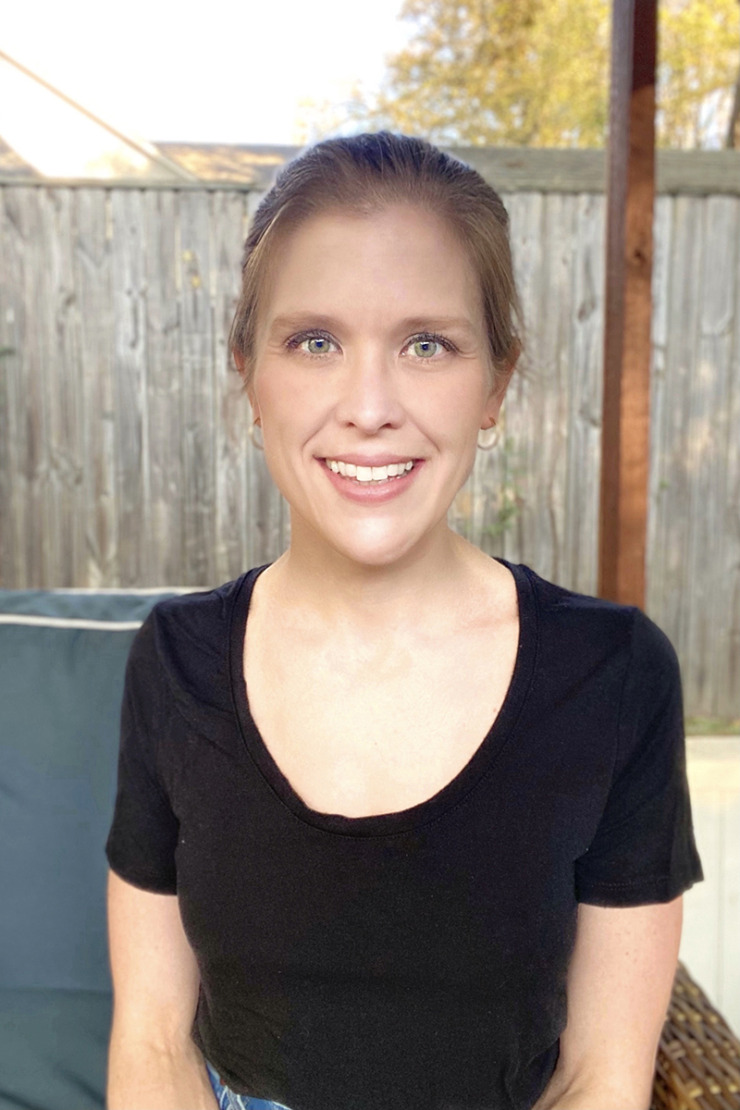 When she’s hit a wall writing, Caki Wilkinson said she refers to the opening lines of “Old Mary” by Gwendolyn Brooks: “My last defense / Is the present tense.” (Courtesy Caki Wilkinson)
“I feel like this is true for a lot of people with writing,” Wilkinson said.
Gladstone showed Wilkinson the classics and beyond, like Rainer Maria Rilke and Mary Oliver, which she loved. A fan of the beat poets, he also had her reading the post-World War II rebellious writers, which she said at the time was “over my head, but it was … definitely really cool.”
“… All through high school, he would kind of read my poems and talk to me about poetry and that just kind of set me on the path of, you know, wanting to keep doing it and wanting to read more and learn more about it.”
It’s a mentorship that instilled confidence in Wilkinson as a budding author, and it didn’t stop when she graduated. Gladstone was one of many congratulating Wilkinson on her Aiken Taylor achievement during her Sewanee celebrations.
Writing poetry wasn’t her only passion. A star athlete in school, Wilkinson moved to Memphis to attend Rhodes, where she was recruited to play basketball. But, just before the season started, she withdrew from the team.
“I just, I kind of had a crisis of faith or something, and I ended up quitting a team before the season even started,” Wilkinson said. “That had been the thing everybody had known me for. … I’d been writing poems all through high school, but nobody knew that really about me. They knew me as this basketball player. So once I quit, I was like, ‘Who am I?’ It opened up this space for me.”
Poetry didn’t become the center of her life immediately. But without basketball, Wilkinson transferred that focus to creative writing classes and gradually dove into writing.
She went on to get her master’s degree in poetry from Johns Hopkins University, then her doctorate in English and comparative literature at the University of Cincinnati.
Three books and a handful of accolades later, she’s an English professor and creative writing director at Rhodes, where she is now the one fostering blossoming writers.
“I don’t know that it’s necessarily going to change the direction of my work,” Wilkinson said of her Aiken Taylor achievement. “But … it gives me a boost of, sort of, confidence in momentum that … what I was doing in poetry was something people were connecting with.”
Top arts and culture stories

..... |